Silicon Valley taught startups to move fast, raise aggressively, and prioritize growth over profitability. In emerging markets, that playbook can become a liability.
Capital does not always arrive on schedule. Markets are fragmented, customer acquisition can be expensive, and companies often operate through layers of infrastructure that mature markets take for granted. When the next funding round disappears, growth built on continuous capital can quickly become a constraint.
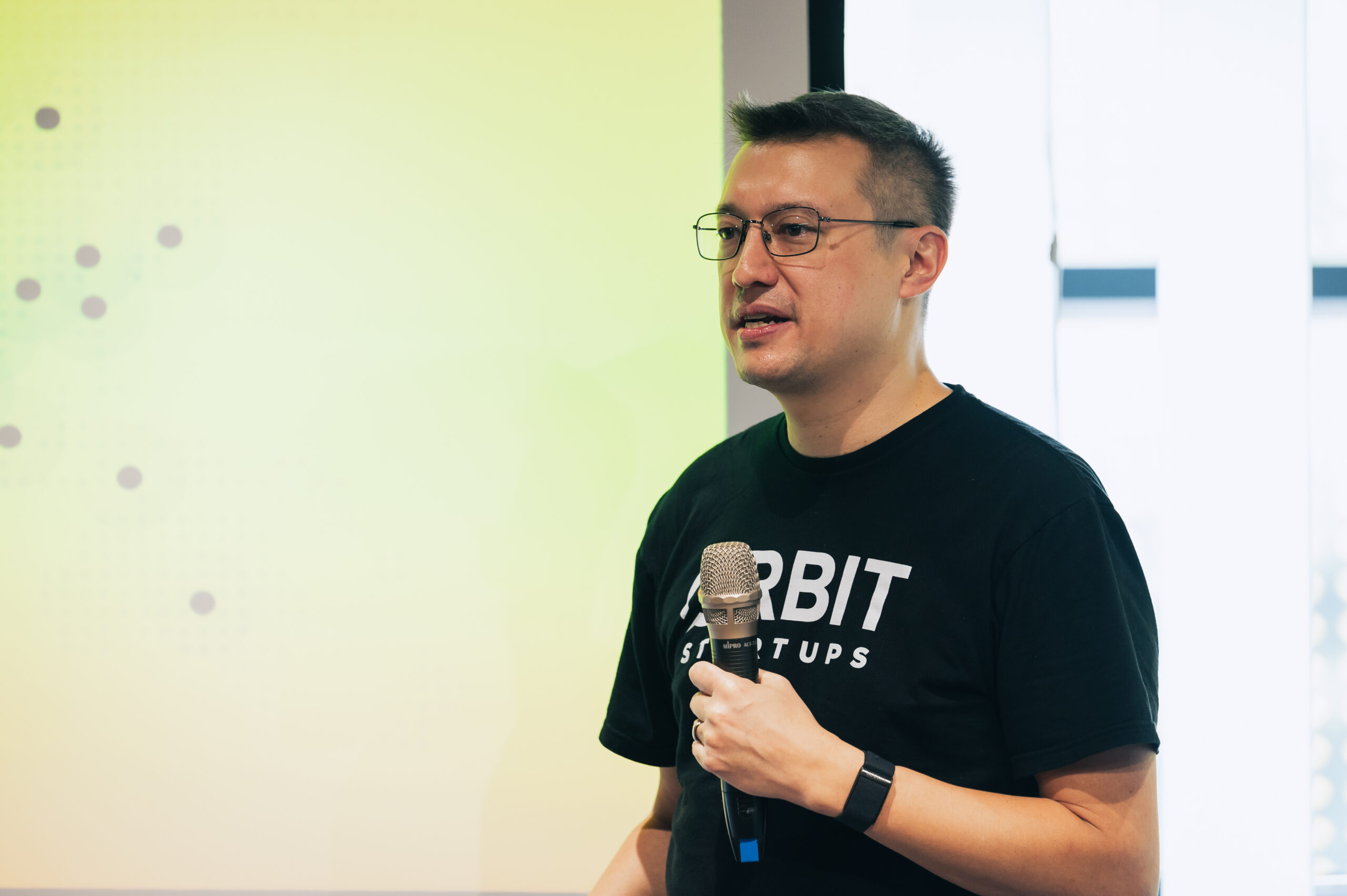
In a recent conversation with AgFunderNews, Orbit Ventures Managing General Partner William Bao Bean shared his perspective on why the Silicon Valley growth playbook does not always translate to emerging markets. After starting his career in technology equity research before moving into early-stage VC, William has spent years investing through different capital cycles across high-growth markets. Here, we unpack some of the ideas behind that view, from capital discipline and AI to commercial traction and ecosystem leverage.
“The only thing that is for sure in an emerging market is that the capital is going to disappear on a regular basis.”
— William Bao Bean, Managing General Partner, Orbit Ventures
Growth is not the same as progress
Blitzscaling assumes that a company can grow rapidly, accept losses, and rely on successive rounds of capital to fund the next stage of expansion. That model can work when capital is deep and consistently available. In emerging markets, that assumption is much harder to make.
A startup can raise a large round, grow rapidly, and build a significant cost and asset base, only to find that the capital needed for its next stage has disappeared. As William puts it, “The Silicon Valley VC model does not work in emerging markets.” The problem is not growth itself. It is building a business around the assumption that the next round will always be there.
At Orbit, we place greater emphasis on revenue, positive economics, and resilience. Companies may not always grow as quickly, but when a shock hits, they have a better chance of surviving and getting another shot. The objective is not to grow slowly. It is to build companies that can keep going when conditions change.
This also means recognizing that there is no single emerging market. Orbit’s approach is to not copy a model market-for-market, but to learn from what has worked in one market and localize it for another. The problems may be familiar, but the infrastructure, customers, and market dynamics can be very different. Dastgyr (Orbit 2021) started in Pakistan by digitizing local food supply and supply chains then added international cross-border trade. “(It’s) an Alibaba for cross-border food trade,” according to William, where farmers in Africa, LatAm, and Asia can sell food to supermarkets in the UK and Europe.
AI is changing the economics
AI is adding another layer to this opportunity. William argues that AI could have an even bigger effect on poorer markets than richer ones because many emerging markets historically could not afford the cost of software. As the cost of delivering software falls, previously uneconomic use cases can become viable.
One Orbit company is using AI to provide loans to farmers, automating the process from application and approval through disbursement and collection. The system runs through channels including WhatsApp and Facebook Messenger and integrates with the bank’s backend. The cost to the bank for the entire process is $1.
Importantly, the farmers are not talking to an AI. They are talking to agents whose work is driven by AI. As William describes it, “The AI is driving the product, but AI is not the product.” That is what he means by AI with emerging-market characteristics: using AI to make services economically viable at price points where traditional models could not work.
Innovation theater doesn’t get customers
Innovation can look productive without creating a business. Startups spend months working with corporates on pilots or innovation programs, only to discover that the corporate was never ready to sign a contract or implement the technology.
The goal should be to identify and move beyond innovation theater and toward genuine commercial engagement. Orbit worked directly with a corporate partner’s business units to first understand their deep pain point of bottlenecked candidate screening. We introduced them to Neufast (Orbit 2019), an AI-powered HR technology company with AI-driven video interviews, automated CV scoring, and competency assessments. They signed a pilot which then led to an annual commercial subscription.
Ecosystems create leverage
Orbit’s portfolio companies operate across related value chains, allowing them to feed into and support one another as an ecosystem rather than operating as isolated businesses. Desert Shrimp (Atarraya) is launching controlled-environment farms in the UAE to grow shrimp on land using 99% less water than traditional farming. They are a key ecosystem partner to QuicKart (Orbit 2025) who links local UAE farms and dairies with homes, restaurants, and hotels. The opportunity is not simply to invest in businesses operating across related areas, but to create connections that can help companies reach customers and build commercial pathways that would be harder to develop alone.
William estimates that more than 60% of VC money goes toward customer acquisition, user acquisition, sales, and marketing. If an ecosystem can reduce some of those costs, companies can reach profitability or positive unit economics with less capital.
That leverage becomes particularly important when capital is less predictable.
Ultimately, Orbit’s investment thesis has remained consistent even as the technology and geographies have evolved. The problems remain familiar; what changes is the technology and where it can be applied. Orbit expanded from Asia into Africa and then Latin America by adapting what it had learned rather than simply copying one market into another.
We look for founders with deep local understanding, passion, hustle, urgency, and a willingness to use data to learn quickly. Founders will fail. Markets will change. Capital cycles will turn.
The companies that endure are often the ones that can learn, adapt, and keep building.
The companies that win may not be the ones that scale fastest. They may be the ones that can keep scaling when the capital cycle turns.