At Orbit, near term predictions are fun but not how we look at the future, owing to our position as early-stage, long-term investors. We focus on how new technologies enable us to solve age old problems that weren’t previously solvable in a profitable way. Orbit’s goal is to be ahead of the curve but not too far ahead.
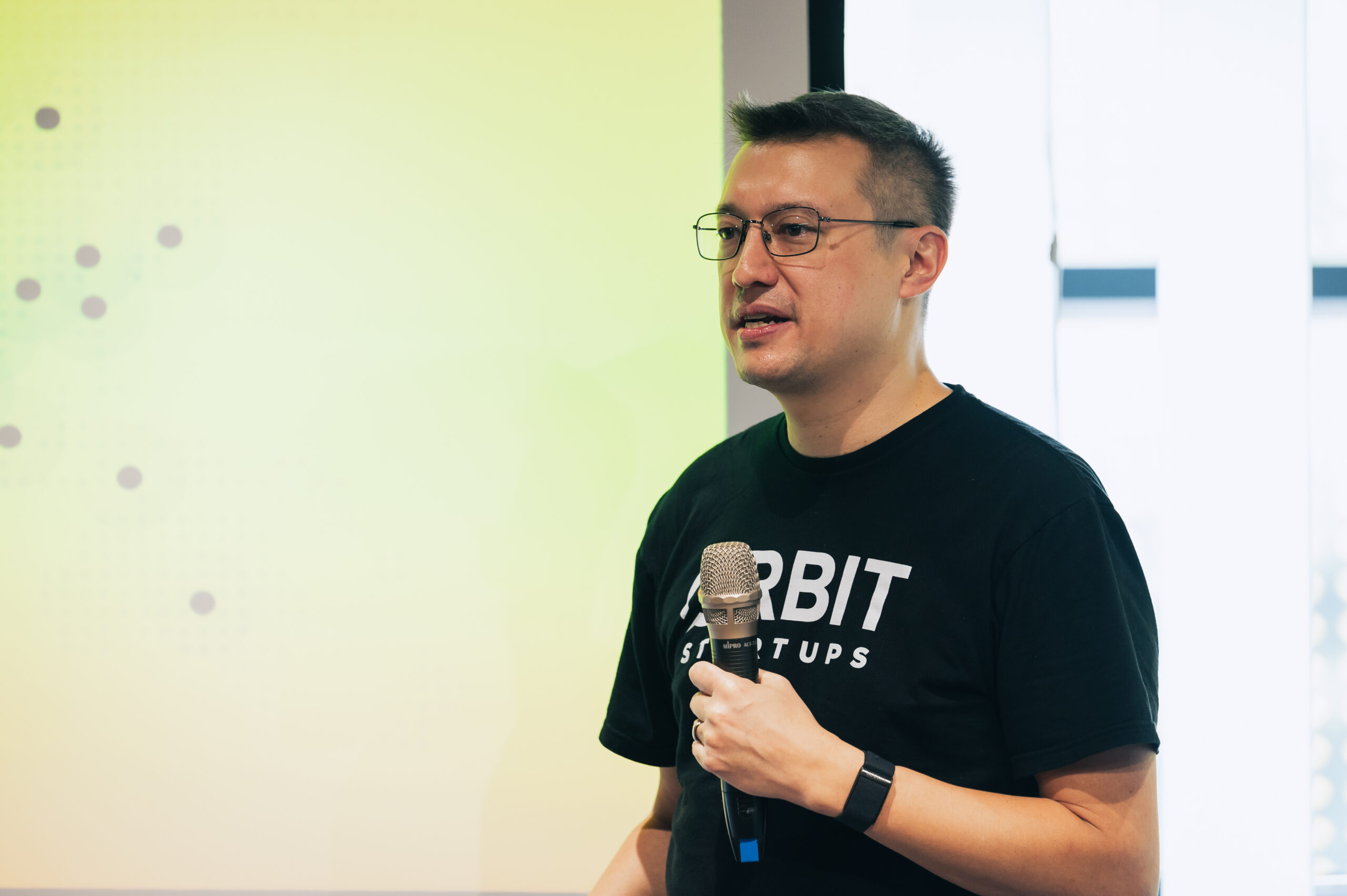
William Bao Bean, Managing General Partner
New centers of power and connectivity
The new centers of influence and economy are Singapore, the gateway to SE Asia, and the GCC, led by Saudi Arabia and the UAE. Singapore ranks third globally in foreign direct investment and serves as the undisputed gateway to Southeast Asia—one of the world’s fastest-growing regions. Meanwhile, the GCC is transforming through massive diversification efforts. Saudi Arabia has committed $100 billion to AI infrastructure development, while the UAE’s non-oil sectors now contribute 75% of its GDP.
In the past, channels of connectivity and investment have been dominated by North and South, but the next decade will be defined by the growth in activity between East and West. Pakistan, Bangladesh and India are connecting to the Middle East and to SE Asia often via Singapore. China is connecting across the global south with important implications.
AI will surge in emerging markets in its own way
Unlike the US and China, emerging markets will double down on AI to optimize product, not be the product. Using AI agents can rarely be profitable in emerging markets as the compute cost is outside most customers’ ability to pay and that the infrastructure can support. Instead startups use AI to optimize their product, driving massive increases in efficiency and profitability.
Stablecoin will take Africa to the next stage in cross-border trade
Over 20% of all stablecoin transactions in the world are happening in Africa. Stablecoin is transforming payments for cross border trade and contract and gig work. We’re going to see strong growth in cross-border trade in Africa in 2026 as technology reduces the drag on trade from traditional financial institutions.
More demand for extreme weather insurance
Insurance is fundamentally a payment for the transfer of risk, such as extreme weather. We’ve seen Catastrophe Bonds (Disaster Bonds) become a US$50B market, a record high. CAT Bonds benefit investors that want a hedge to the stock market through this non-market correlated product. Extreme weather is increasing and private insurers are retreating leaving more opportunity for alternative capital markets solutions in this space.
Oscar Ramos, Managing General Partner
VC goes back to its grassroots
The artificial abundance in VC is dead. The capital injected into VC is very, very limited compared to what used to be available—and a lot of it is being absorbed by the super AI companies raising mega rounds. Everyone else will have to go back to grassroots—VC rising alongside real entrepreneurship.
Warren Buffet famously said, “You only find out who is swimming naked when the tide goes out.” The water level is dropping fast so we’re going to see very soon which startups and VCs have real value creation and which ones aren’t wearing anything.
Successful VC spots good founders doing something that customers want and are willing to pay for, ignoring herd mentality. Historically, “AI wrappers” have been ignored by VCs for being “not tech enough” and not defendable. That’s short sighted – wrappers that that create real value for their customers with unique data and deep integration, them to easily switch between different models without user disruption In a time of scarcity, the best founders know how to build companies without relying on excess capital creating more efficient companies and building with less competition. In 2026 only those that create value are going to survive – startups and VCs.
Cross-collaboration across the Global South will accelerate
One of the most meaningful shifts in emerging markets will be the acceleration of collaboration across the Global South itself. Different parts of Asia are already interconnected. African startups have begun this transition by building strong commercial and operational links with West Asia (Middle East), India and China. We expect 2026 to be the year when many Latin American startups will follow a similar path, increasingly connecting with Asia through hubs such as Shanghai, Singapore, and Dubai. These relationships will extend beyond market entry or fundraising; they will influence how products are built and companies are operated.
The dollar-SWIFT gateway will meet its challengers
For years, there have been active conversations about stablecoins and central bank-issued digital currencies. 2026 will be a genuine inflection point, as different payment options and efforts will converge to challenge the dollar-SWIFT gateway that has dominated global finance for the last 50 years.
It is not enough to track various initiatives in insolation. European bank stablecoins, Project mBridge, Qivalis and several major central bank digital currencies from China and India emerged for different reasons (sanctions, sovereignty pressures, modernization programs). However, the unusual density of go-live dates in 2026 suggest that there are enough viable alternatives, available at scale to achieve rapid adoption.
Emerging markets will increasingly turn to non-traditional capital pockets
With changing macro-politics, markets are shifting. Heavily US-dependent emerging markets (e.g. Latin America) will have to diversify their global connections and investor base to other regions. There have been reciprocal interests in alternative capital pockets from Asia-Pacific and the Middle East to enter these markets. We’ll be seeing a lot more concrete cases of market expansion and cross-border capital investment coming from “alternative” regions than ever before in 2026.
Mid-size funds will emerge as the best of both worlds
Recent industry data has shown that LP capital is trending towards large mega-funds or very small micro-funds under $25M, and less to mid-size managers. Tiny micro-funds appeal because they provide industry targeted insights and portfolio support, very deep sourcing in a limited region and move fast. Mega‑funds stay attractive because LPs can concentrate capital into big checks for well-known funds that cover a wide part of the market while reducing the number of GP relationships to diligence and manage. In 2026, mid-size funds will emerge as the “best of both worlds,” – with a specialized portfolio concentrated enough to stay close to founders and broad enough to spot patterns across sectors, stages, and geographies. Mid-size funds will show they can be operationally efficient enough to turn those insights into visible, repeatable value for LPs (more resilient, less all‑or‑nothing outcomes) and for startups (tailored hands-on support to operate) than either side of the extreme offers.